
How Holistic Development in Early Childhood Is Supported by Chinese Learning Apps
Key Takeaways:
How does DuduTown support holistic development in early childhood learning?
- Holistic development is strengthened when language learning supports cognitive thinking, emotional confidence, physical engagement, and creativity together rather than in isolation.
- Syllabus-aligned lessons help children reinforce what they learn in school, reducing confusion and supporting steady language progress.
- Adaptive placement ensures children learn at a level suited to their actual ability, allowing Mandarin learning to progress with clarity and confidence.
- Structured quizzes encourage focus, perseverance, and responsibility, helping children build confidence through earned progress.
- Multi-sensory activities such as tracing, listening, and visual matching make language learning engaging while supporting fine motor and auditory development.
- Clear progress visibility helps families stay informed and provide consistent support at home, reinforcing learning beyond the classroom.
Introduction
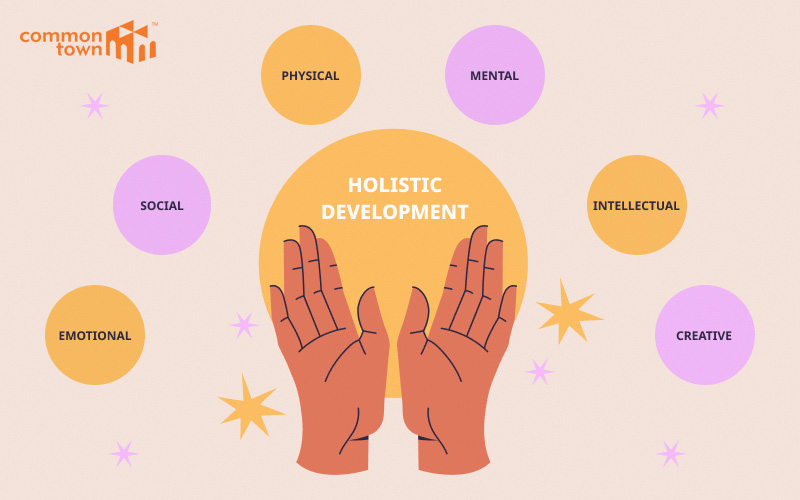
In early childhood, learning is most effective when development is approached as an interconnected process rather than a series of isolated academic targets. Holistic development focuses on nurturing the whole child by supporting thinking skills, language growth, emotional confidence, physical coordination, and creativity together. This approach recognises that children learn best when these areas reinforce one another through consistent and meaningful experiences.
CommonTown developed DuduTown to support Mandarin learning in a way that aligns closely with how children learn in Singapore schools and the region beyond. Rather than introducing parallel or disconnected content, the app reinforces what children already encounter in class through syllabus-aligned lessons, adaptive placement, and structured progression. When digital learning is intentionally designed around classroom realities, holistic development becomes achievable within everyday learning routines.
Why meaningful structure matters for early Mandarin learning
In early childhood, engagement alone is not enough to support lasting language development. While novelty-driven apps may capture attention briefly through games or animations, they often lack the consistency children need to build understanding over time. Without clear sequencing, familiar formats, and intentional progression, learning can become fragmented, making it harder for children to connect new concepts with what they already know.
Structured learning apps, especially those aligned with school approaches, provide predictability and coherence. Repeated lesson formats help children focus on language itself rather than navigating new interfaces or rules. Clear progression supports memory, confidence, and transfer of learning from one context to another. For Mandarin learning, where vocabulary, sentence structure, and character recognition build cumulatively, structure creates the conditions for meaningful practice rather than surface-level exposure.
This is why school-aligned design matters. When digital learning follows the same logic and flow as classroom instruction, children are better able to reinforce, retain, and apply what they learn, supporting deeper and more sustainable language development.
How do Chinese learning apps support cognitive and language development?
Language learning plays a central role in early cognitive growth, shaping attention, memory, and comprehension. Through interactive Chinese learning materials for children, DuduTwon reinforces these skills using chapter-based lessons that follow the same structure children experience in school.
The app begins with a prerequisite assessment that adapts in difficulty based on the child's responses. This ensures learners are placed at a level that reflects their actual ability rather than age alone, supporting early childhood language development through appropriate pacing. By reinforcing familiar concepts before introducing new ones, children build strong bilingual foundations without unnecessary confusion or overload. This structured approach helps children learning Mandarin develop steadily, with clarity and confidence at each stage.
How does structured language learning support social-emotional growth?
Language learning also shapes how children respond to challenge and achievement. In DuduTown, Chinese Learning progression is structured around quizzes that must be completed before moving on. Each quiz can only be attempted once, encouraging focus, preparation, and accountability.
This approach helps children develop confidence through earned progress rather than guesswork. As they advance independently, learners practise patience and perseverance, strengthening emotional regulation alongside academic skills. As a Chinese app for kids, this disciplined structure supports motivation while maintaining realistic expectations around effort and learning responsibility.
How do Chinese learning apps engage physical and sensory development?
Young children learn through movement and sensory engagement. Activities such as tracing Chinese characters, matching words to images, and listening to native pronunciation activate multiple senses at once. These interactions support fine motor coordination, visual recognition, and auditory processing.
Through touch-based and audio-supported activities designed to help kids learn Mandarin, language practice becomes more engaging and immersive. This physical engagement helps sustain attention while supporting whole-child growth within a structured learning environment.
How does Chinese language learning support cultural and creative awareness?
Language carries stories, values, and cultural context. Through illustrated reading materials and guided listening activities, children are introduced to cultural elements embedded within Mandarin usage. These experiences encourage curiosity and imagination while helping learners connect words with meaning rather than memorisation alone.
Through Mandarin learning apps meant for children, they are able to explore language as a form of expression rather than simple memorisation. This creative engagement supports empathy and curiosity as part of holistic development, reinforcing the idea that language learning is both intellectual and imaginative.
How does DuduTown support consistent learning at home?
Consistency beyond the classroom plays an important role in early learning. DuduTown provides clear visibility into a child's progress, allowing parents to understand completed chapters and current levels. This allows parents to better support language learning by understanding a child's progress at home.
Conclusions
When digital tools are designed with structure and intent, they can meaningfully support holistic development in early childhood. DuduTown demonstrates how a syllabus-aligned learning app can reinforce classroom teaching while nurturing cognitive thinking, emotional confidence, physical engagement, and creative awareness together. By pacing learning appropriately, maintaining disciplined progression, and supporting continuity between school and home, the app helps children grow into confident and capable learners. Discover how DuduTown can support your child's Mandarin learning journey with structure and clarity.